CMHC Says Prices Will Keep Falling in 2026 — Should You Wait to Buy?
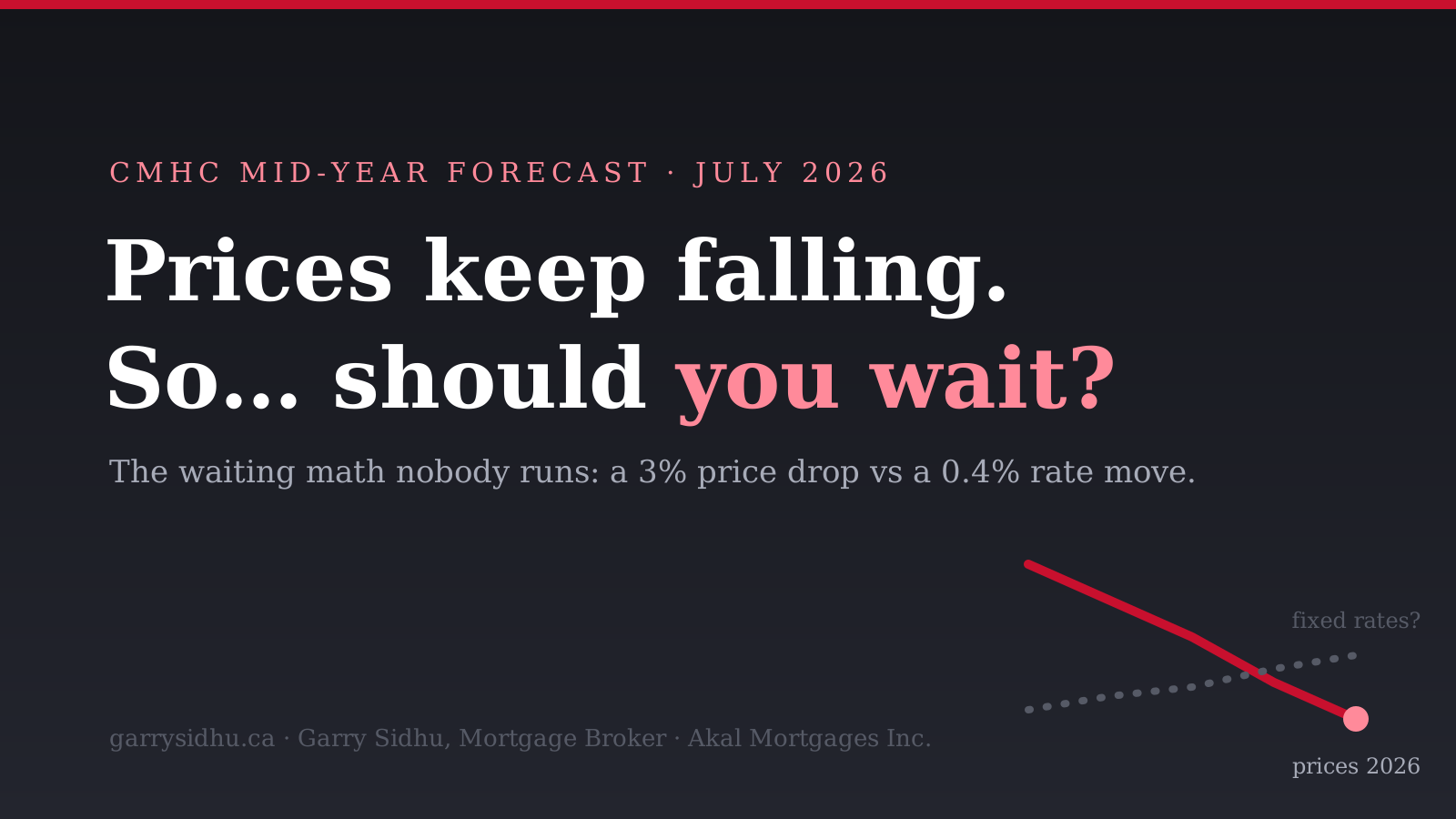
Canada's national housing agency just told every buyer on the fence they were right to wait — sort of. In its Housing Market Outlook mid-year update (July 22), CMHC forecasts home prices will keep declining through 2026, with sales staying weak and new construction falling — especially in Ontario. Everyone's waiting for the bottom. But here's what almost nobody runs: the math of waiting. And in one very realistic scenario, waiting for a cheaper house leaves you paying $30 a month more — for less home.
What CMHC actually said
- Prices: declining through 2026, then only modest growth in 2027–2028.
- Sales: recovering gradually but staying below the past decade's levels — with Ontario and B.C. named as the markets where affordability keeps sidelining buyers.
- New construction: housing starts keep falling, with Ontario condo construction singled out as weak.
- Rentals: vacancy rising in Toronto, Vancouver and Montréal, which should slow rent growth.
- The economy: slow growth (about 0.7% for 2026, per BNN Bloomberg's coverage), with trade uncertainty still hanging over everything.
CMHC's deputy chief economist Kevin Hughes put the buyer freeze plainly: "Price reductions have not yet brought demand back," with uncertainty, incomes and borrowing conditions keeping buyers sidelined. Translation: sellers are cutting prices and buyers still aren't showing up. If you're pre-approved and shopping right now, you may have less competition than at any point in years.
The waiting math nobody runs
Take a $700,000 house in the Bradford–Barrie corridor with 20% down, 25-year amortization. Say you wait six months and CMHC is right — the price drops 3% to $679,000. Feels like a win. Now add the part everyone forgets: your mortgage rate isn't frozen while you wait. Fixed rates have actually been edging up in recent weeks as bond yields climbed — even while the Bank of Canada holds at 2.25%.
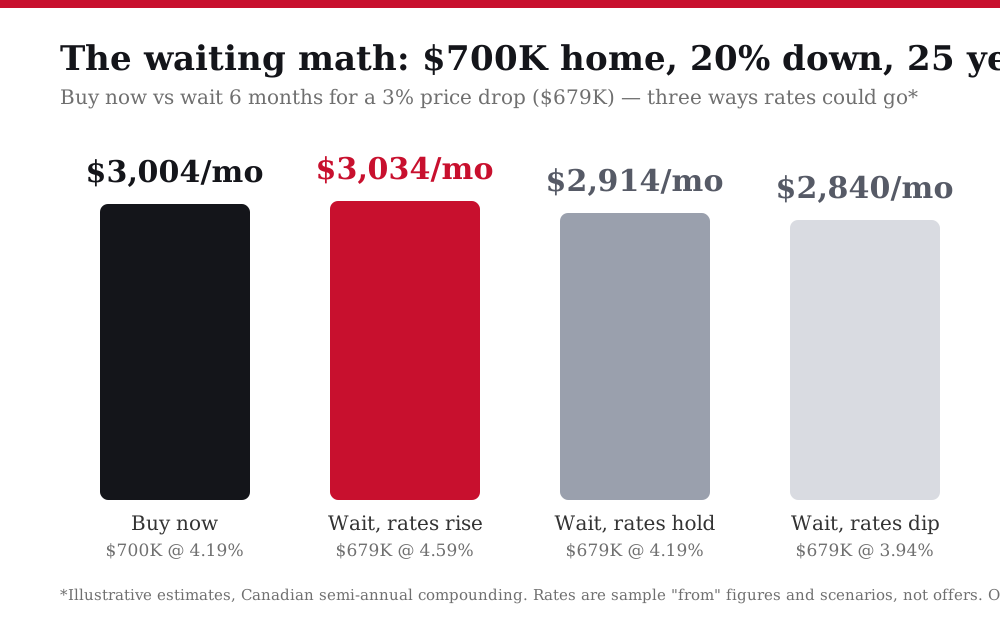
- Buy now — $700K at a 4.19% 5-year fixed: about $3,004/month.
- Wait, rates hold — $679K at the same 4.19%: about $2,914/month. You saved $90/month. Real, but modest.
- Wait, rates dip to 3.94%: about $2,840/month — the dream scenario, and it needs the Bank of Canada to cut on September 2 and lenders to pass it through fixed pricing.
- Wait, rates rise to 4.59% — a 0.40% move, the kind bond markets deliver without asking permission: about $3,034/month. You waited six months, the house got cheaper, and your payment went up.
That's the whole trap in one sentence: a 3% price drop can be completely erased by a 0.4% rate move. Prices move slowly and make headlines; rates move fast and don't. (Numbers are estimates using Canadian semi-annual compounding — current "from" rates are on the rates page, and they change without notice. O.A.C.)
The part of the forecast working in a buyer's favour later
Buried in the same report: housing starts keep falling, and Ontario condo construction is stalling. Homes not started in 2026 are homes not completed in 2027–28 — right when CMHC expects demand to gradually recover. Less new supply meeting returning demand is exactly how "modest growth afterward" turns into firmer prices. The window where you can negotiate — sellers cutting, buyers scarce — is open now, not indefinitely.
When waiting genuinely is the right call
I'm a broker, not a cheerleader — plenty of people should wait. Wait if your income is unstable or probationary right now. Wait if buying would drain every dollar and leave no closing-cost cushion (run the real number here — it's more than most people think). Wait if your timeline is under three years, because transaction costs eat short holds. And wait if you'd be stretching to a payment that only works if everything goes perfectly. A falling market punishes forced sellers — never become one.
How to sit on the fence properly
Here's the move almost nobody uses: a pre-approval is a free option on today's rates. It holds a rate for up to 120 days, costs nothing, and doesn't commit you to buying. If rates rise while you shop, you keep the lower one; if they fall, you take the new one. Waiting without a pre-approval is a bet; waiting with one is a strategy. Get the rest of the prep done from the couch: the first-time buyer checklist covers documents, credit and the mistakes that break approvals — and the mortgage plan builder shows your realistic price range in about two minutes.
Your questions, answered honestly
Should I wait for house prices to drop more in 2026?
CMHC does expect further declines this year — but the savings from a modest price drop can be erased by a small rise in fixed rates, and Ontario's falling construction points to tighter supply in 2027–28. The honest answer depends on your income stability, savings and timeline, not the headline. Run your own numbers before deciding.
Does a falling market mean a house is a bad buy?
Not if you're buying a home to live in for five-plus years. CMHC's own forecast has prices returning to modest growth in 2027–2028. What falling markets punish is short holds and stretched budgets.
What happens on September 2?
The Bank of Canada's next rate decision. With June inflation at 2.8% and core measures below target, markets see room for a cut — but nothing is promised, and fixed rates follow bond yields, which have been drifting up. That's exactly why a 120-day rate hold beats guessing. (Background: the June inflation breakdown and July's Bank of Canada hold.)
Is this different in Bradford and Barrie than in Toronto?
CMHC's Ontario warning is broad, but commuter-belt markets like Bradford have held up differently than downtown condos — detached family homes and condo towers are two different markets. Local price behaviour is a conversation for your realtor; what the mortgage side controls is making sure you're qualified before you negotiate.
Garry Sidhu is a licensed Mortgage Broker (Lic. #M21004814) with Akal Mortgages Inc. (FSRA #10845), serving Bradford, Barrie, Newmarket and all of Ontario — six years licensed, referral-built, with 65+ five-star Google reviews and access to 88+ lenders.
This article is general information, not financial or investment advice — talk to a licensed professional about your situation. Market data from CMHC's July 22, 2026 release; rate figures are illustrative "from" estimates as of July 27, 2026 and change without notice. All mortgages O.A.C.
On the fence? Get pre-approved and make waiting a strategy — start your plan here, or ask the chat anything, any hour, in any language.
✓ You're in! Open your checklist here →
Have a question about your mortgage?
Get a straight answer and your options — free, no credit check.